Bio Writing Services
A bio is the cement that holds your presentation together, creates an immediate identity, brands a style and leads the reader directly to the music. Ideally, your bio should serve multiple purposes: as a key ingredient in your press kit, as an essential element on the homepage of your website, on all of your social media, and as an easy introduction to bookers, journalists, fans and the music business at large.
Recording artists, songwriters, performers, producers and composers all benefit from well-written bios. "Send me a link to your bio and music" is usually the first request you'll get.
In this age of cut-and-paste online journalism, a writer will often appropriate every single word of your bio, tack their byline on it, and submit it to a website or other outlet. A finely tailored bio allows you, your management and publicity team to control this narrative.
To request professional bio services from Dan Kimpel, use the form on the contact page.
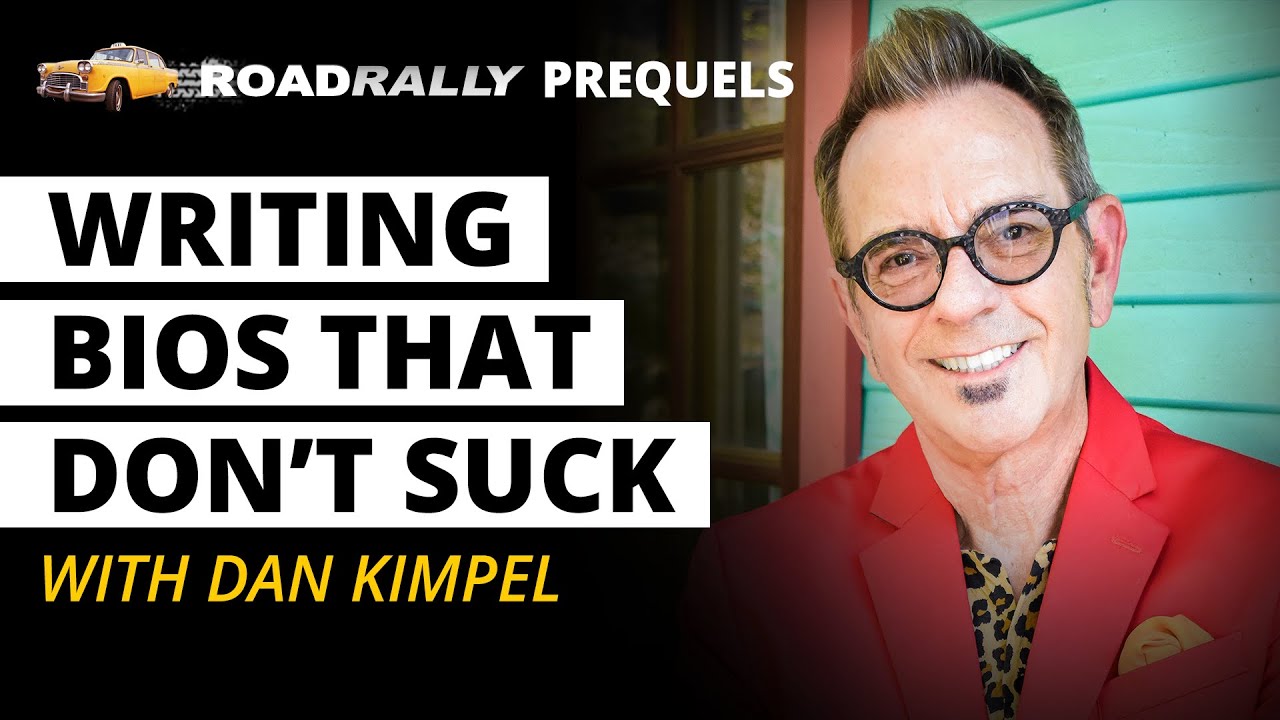 Writing Bios That Don't Suck — watch on YouTube
Request a Bio
Writing Bios That Don't Suck — watch on YouTube
Request a Bio

13 Things to Avoid
- Don't tell, show.Beware the hackneyed cliché, the imprecise metaphor, and the goofy strained adjective. "Joe Jones is a brilliant artist" or "Sue Smith is destined for stardom" are lame and off-putting. The bio must lead the reader to their own conclusions.
- Avoid the time machine."She began playing piano at the tender age of four, and by age five…" Instant naptime. Begin in the present, then go back in time, but only so far as the story is fascinating.
- Irrelevant career history."After a successful career in marketing, he decided to return to his first love, music." Career choices that have nothing to do with music are needless distractions. Music professionals don't want to know about your straight job.
- Grandiose comparisons."Susie Stiletto combines the sensitivity of Joni Mitchell fused to the aggressive lyricism of P!nk…" This tells us nothing about the subject and displays a wannabe attitude.
- Tired phrases."Eagerly anticipated," "critically-acclaimed," and "best-kept secret" will trigger the hype meter in overworked journalists. Other offenders: "unique" (who isn't?) and "quickly becoming a household name."
- Spelling and grammar errors.Bad copy is galling to those whose livelihood is the written word. Keep words in the active voice: "John Smith incites his audience," not "the audience is incited by John Smith."
- Exaggerating or outright lying.Being on the preliminary Grammy ballot does not make you "Grammy-nominated." Questionable awards will make you appear fraudulent and marginal.
- Generic description.Name and claim your musical style. A seething metal-core aggregation and a soothing cerebral instrumental artist can't possibly share the same metaphors. Your bio must speak in the same voice as your music.
- Too much verbiage.A one-page bio is standard length; a longer bio is fine only if your story warrants it. Otherwise, less is more.
- Not keeping it current.Your bio needs to be kept up to date, just like your photos and the other elements in your press kit and website.
- Unnecessary stylisation.You may be tempted to let your creativity run wild with fictionalized prose, but it may be off-putting or confusing to your readers.
- Being dismayed by a lack of credits.For a new artist without significant history, emphasise elements of your personality, creative process, or an interesting fact — but only if it relates to your music.
- Writing it yourself if you're not comfortable.Hiring a pro who understands the marketplace and your music is a worthwhile investment. Make sure the writer will be amenable to changes and rewrites until you're satisfied.
Some Examples
In creating a bio for the legendary Grammy Award winners Jimmy Jam and Terry Lewis, I led with their achievements:
Big & Rich as iconic country artists required a similarly grandiose approach:
Not everyone I write about has such illustrious credits. For indie artist Arielle Silver, I focused on her musical and philosophical traits:
For Roscoe & Etta, I needed to establish in the first paragraph that they were a new duo with individual histories:
I hope these brief examples give you an idea of what makes an effective bio. Music people are intuitive about press and publicity materials; if a bio is non-existent, shoddy or amateurish, odds are the music it represents will share these same adverse qualities.
— Dan Kimpel